One Pan-African team
A single Pan-African payroll team configures and runs your payroll — consistent service, wherever your people are.
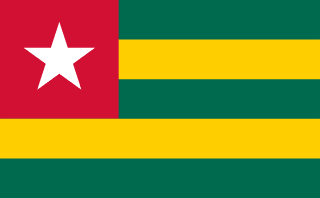 Popay Payroll · Togo
PopayPayroll
Statutory contributions, compliant payslips, local contracts and leave — configured to local law inside our own engine.
One engine, all of Africa. Togo payroll rules run natively inside our own gross-to-net engine — monitored and kept current by our Pan-African team, not stitched from third-party aggregators.
TG · payroll across the continent
Understand HR in Togo
The full local picture for Togo: statutory contributions and the rules our engine runs natively — maintained by our Pan-African legislation team.
01 · At a glance
The fixed parameters every Togo payroll run starts from.
02 · Statutory obligations & contributions
Statutory contributions declared by the employer, each scheme with its own rate,
| Contribution | Employer | Employee | Basis & notes |
|---|---|---|---|
| CNSS — Social Security Old Age / Pension | 17.5% | 4% | On gross monthly salary, capped at a monthly ceiling of 300,000 FCFA |
| CNSS — Family Benefits | 7% | 0% | Uncapped gross salary base (minimum base: SMIG 52,500 FCFA) |
| CNSS — Work Injury / Occupational Risks | 2.5% | 0% | Uncapped gross salary base (minimum base: SMIG 52,500 FCFA) |
| Universal Health Insurance | 3% or 5% | 2% or 5% | Total rate of 10% (5% each for employer/employee, or 3% employer and 2% employee, depending on the scheme), capped at a monthly salary of 500,000 FCFA. |
03 · Income tax brackets (IRPP)
In Togo, personal income tax is calculated by applying a progressive rate (0% to 35%) to net taxable salary after deducting social contributions, a 28% professional expense allowance, and dependent tax reliefs.
| Annual taxable income | Tax Rate |
|---|---|
| 0 – 900,000 | 0% (Tax free) |
| 900,001 – 3,000,000 | 3% |
| 3,000,001 – 6,000,000 | 10% |
| 6,000,001 – 9,000,000 | 15% |
| 9,000,001 – 12,000,000 | 20% |
| 12,000,001 – 15,000,000 | 25% |
| 15,000,001 – 20,000,000 | 30% |
| Above 20,000,000 | 35% |
| Family Situation / Dependents | Reduction |
|---|---|
| Per dependent (spouse, children up to age 25, disabled dependants, or dependent parents and grandparents) | Fixed deduction of 10,000 FCFA per month |
| Maximum dependent allowance limit | Limited to 6 dependents (reducing the net taxable income by up to 60,000 FCFA per month). |
04 · Employment contracts & other terms
Indefinite-term contract (CDI) · Fixed-term contract (CDD)
15 days (hourly workers) · 1 month (~4 weeks for workers/employees) · 3 months (~13 weeks for supervisors and executives)
Based on the average monthly salary over the previous 12 months: 35% per year for the first 5 years, 40% for years 6–10, and 45% thereafter. Not payable in cases of gross misconduct
After 4 consecutive years on a CDD without conversion to a CDI, the employee receives 1 month’s gross salary as compensation
Compensation is due for unserved notice, based on the gross salary and benefits that would have been earned, plus payment for unused leave days.
Public sector: Exceptional bonus periodically granted. Private sector: Not statutory by law, but governed by employment contracts or collective agreements
Based on average earnings over the last 5 years: 20% of average monthly income, plus 1.33% for each 12-month contribution period beyond 180 months. Only 50% of the retirement severance bonus is taxable under IRPP.
05 · Leave & employee rights
The law sets the floor; contracts and collective agreements can add to it. Below are the statutory minimums your accruals must track.
Annual leave: 2.5 working days per month (30 days per year), with possible extra days based on seniority under collective agreements.
A medical certificate is required. Pay depends on seniority and collective agreement provisions.
14 weeks (6 before and 8 after birth). CNSS pays 50% of average daily salary, subject to 12 months of registration. Employer top-up may apply. Family benefits are also available for up to 4 children.
2 days of paid leave for the birth of a child.
3 days for the employee’s marriage, 3–4 days for the death of a close relative, and 1 day for a child’s marriage
06 · Unions & collective agreements
Affiliated unions negotiate wage scales and union dues that your payroll must calculate, deduct and remit. A poorly applied collective agreement can lead to a dispute before the required Court.
Represents workers in sector-level social dialogue and collective bargaining negotiations affecting wage grids and working conditions
Key participant in national tripartite negotiations (Government, Employers/CNP-Togo, Unions) establishing collective agreement updates (CCIT) and SMIG adjustments
Negotiates interprofessional collective agreements setting employer guidelines on benefits, classification scales, and payroll compliance standards
A single Pan-African payroll team configures and runs your payroll — consistent service, wherever your people are.
Statutory contributions, income tax and net pay computed and presented on a payslip built for local requirements.
Local rules are configured natively inside our engine, not stitched from third-party aggregators — one accountable system, one contract.
Tell us about your team in Togo and we'll map your options — payroll, contracts and local compliance — plainly and without commitment.
Yes. Togo statutory rules are configured natively inside our own gross-to-net engine and maintained by our Pan-African legislation team.
Yes — compliant payslips and statutory leave are all part of the service.